How EDocGen Document Generator Works

From template to finished document in three steps — no coding, no manual formatting, no limits on volume.

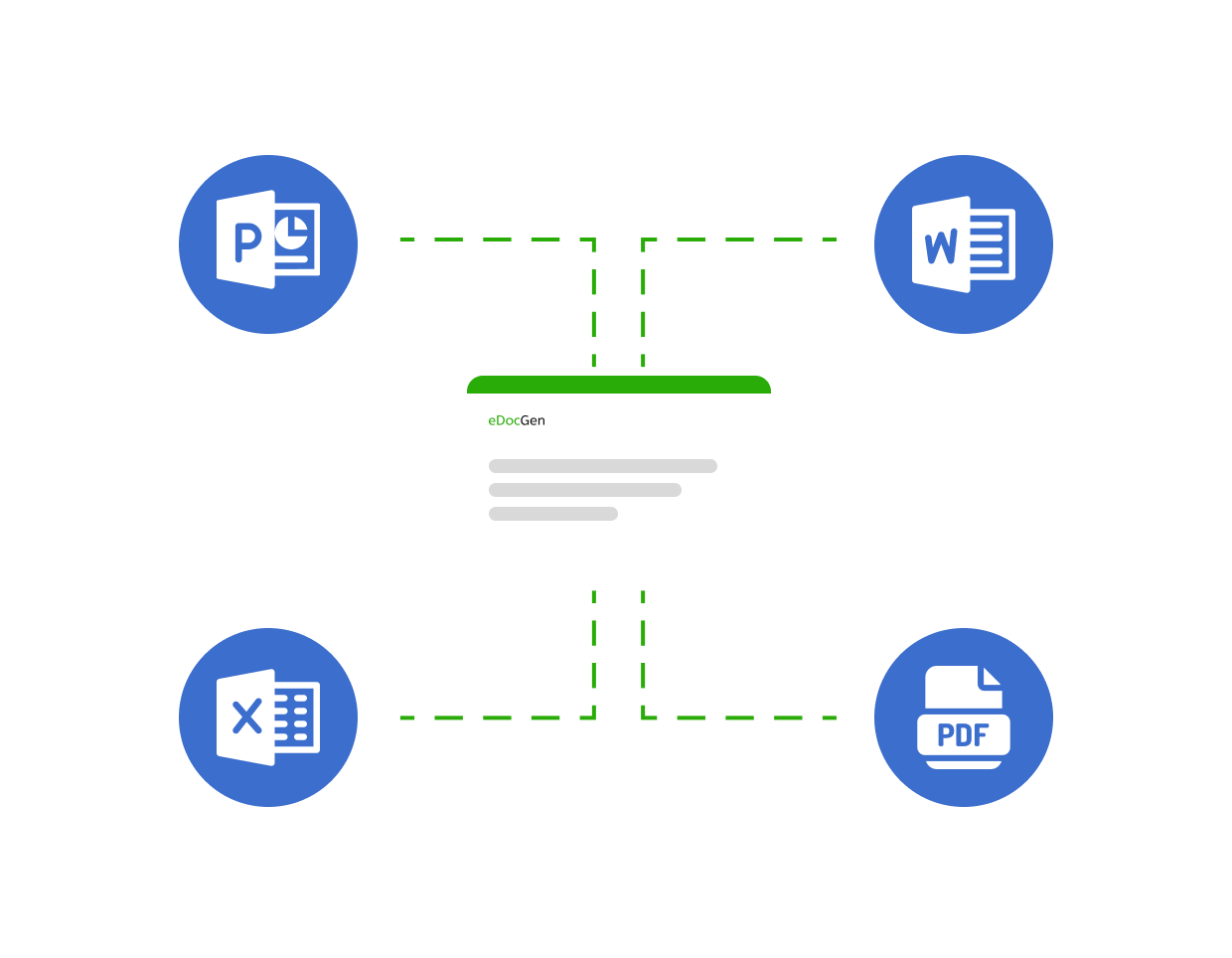
TL;DR: EDocGen merges any data source into any document template to produce PDF, Word, PowerPoint, or Excel output — on-demand, in batch, or via API. You bring the template. You connect the data. EDocGen does the rest.
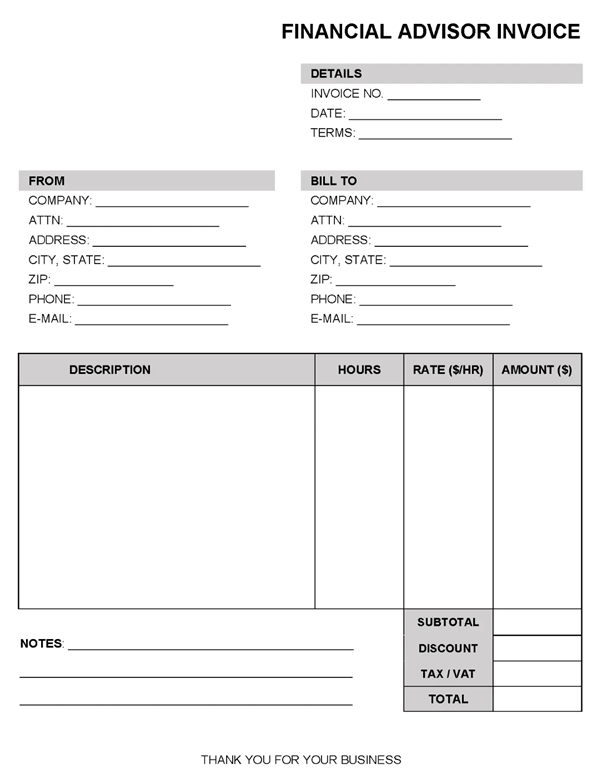
📄
Step 1
Your Template
Word · PDF · PPTX · Excel
+
🗄️
Step 2
Your Data
DB · JSON · Excel · CRM · API
Output
Generated Document
1 document or 100,000

Step-by-Step: How Document Generation Works

Follow the four steps below to go from an existing template to an automatically generated, distributed document.

STEP 1

What is a document template — and how do you build one?

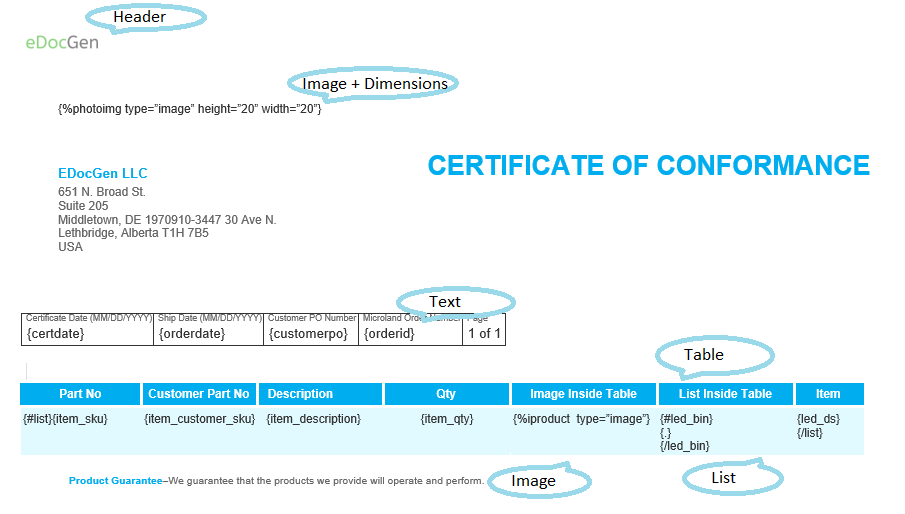
A document template is your existing Word, PDF, PowerPoint, or Excel file with dynamic field tags added wherever live data should appear. EDocGen uses a straightforward tag syntax:

// Text field
{{CustomerName}} — Dear {{CustomerName}}, your order total is {{OrderTotal}}.

// Repeating table row (loop over line items)
{{#each LineItems}}
  {{ProductName}}   {{Qty}}   {{UnitPrice}}
{{/each}}

// Conditional section
{{#if Discount}} Special discount applied: {{Discount}}% {{/if}}

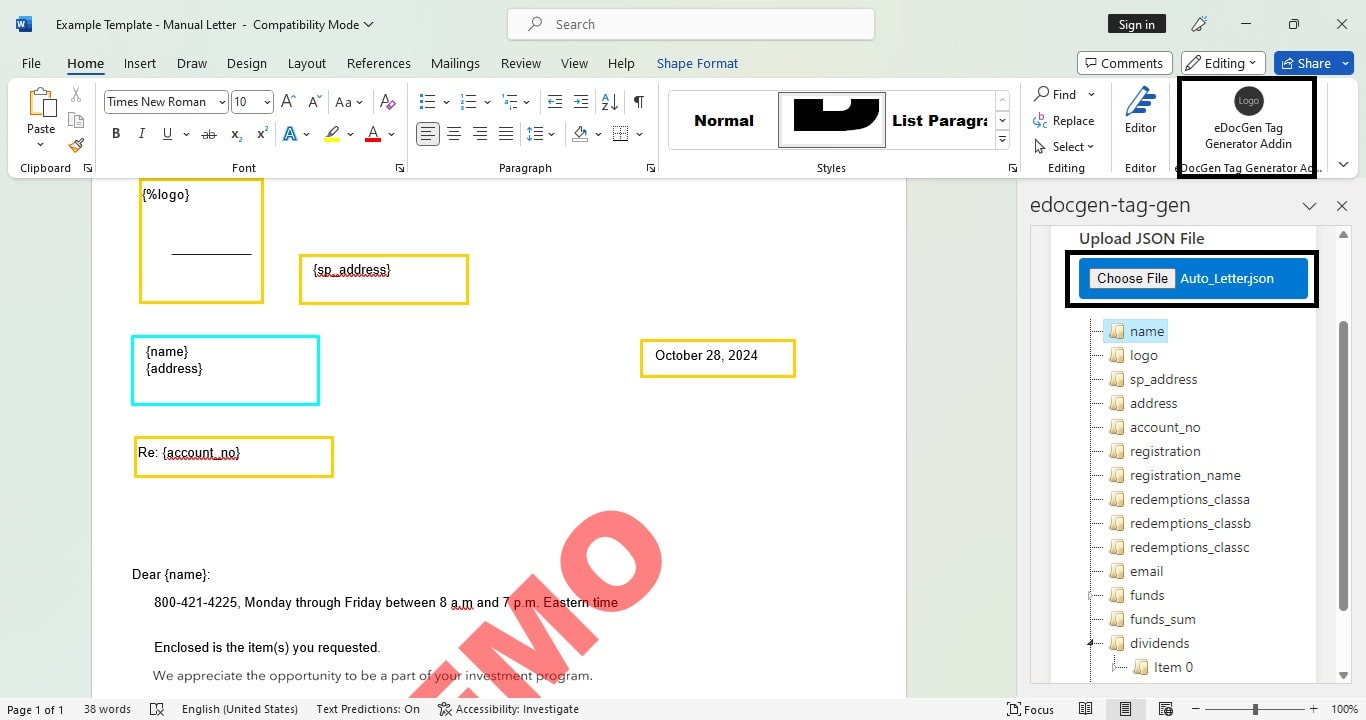
You never need to redesign your templates. Add tags in Microsoft Word, then upload. The EDocGen template builder and Word add-in guide you through the process.

Document template with dynamic merge field tags
EDocGen Word add-in for template building

Supported template formats:

Microsoft Word (.docx) PDF (fillable & standard) PowerPoint (.pptx) Excel (.xlsx)

→ Learn more: Template Builder Guide · Loops & Repeat Sections · Conditional Logic

STEP 2

What data sources can you connect?

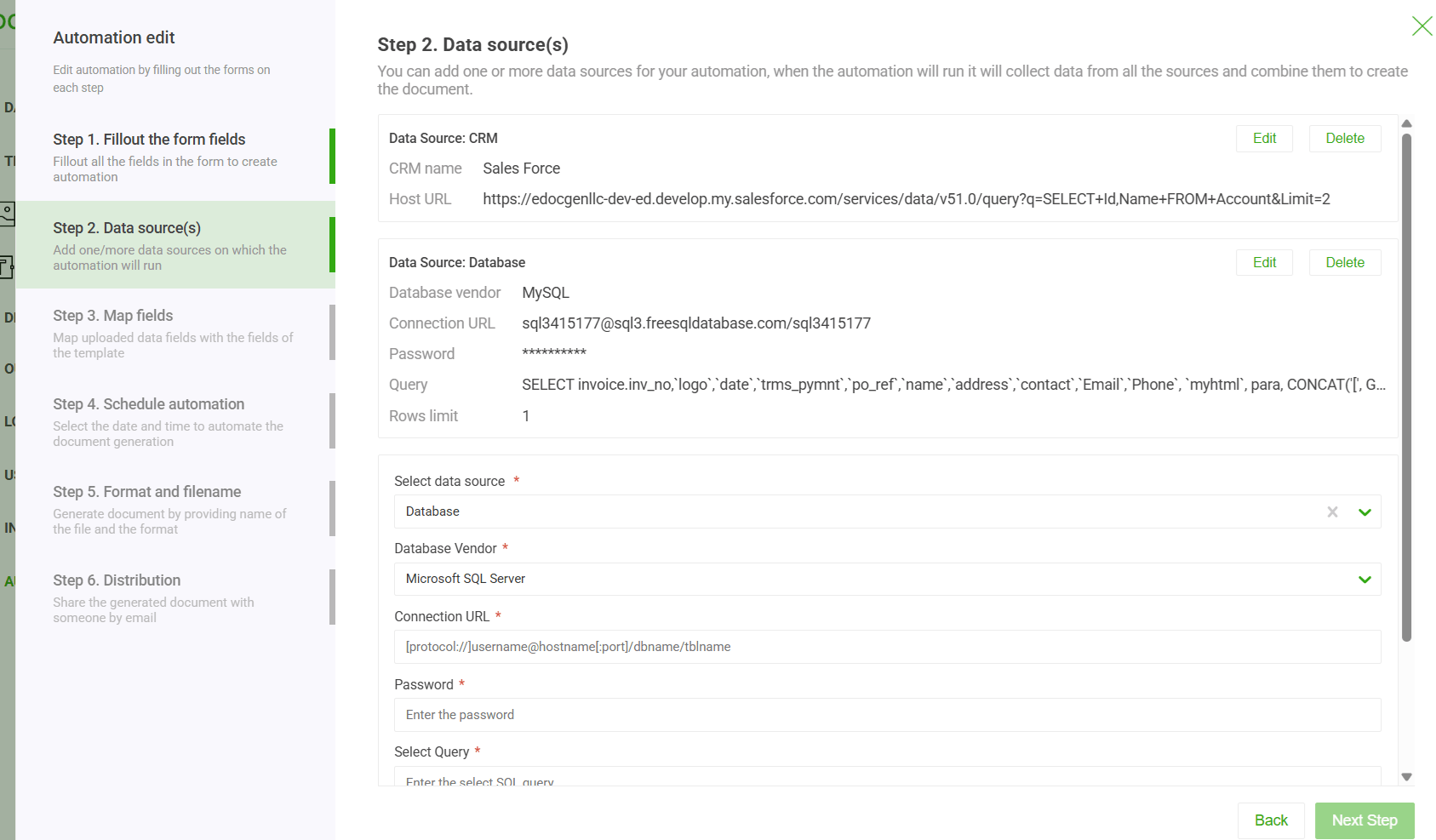
EDocGen connects to virtually every data source your business uses — no middleware required. Choose the source that fits your workflow:

📁 File-Based Sources

JSON XML Excel / XLSX CSV

🗄️ Relational Databases

SQL Server Oracle MySQL PostgreSQL MongoDB Azure SQL

☁️ Enterprise Applications

Salesforce Dynamics 365 REST API Python C# / .NET PHP Java

🖥️ Interactive (Web Form)

Auto-generated web form Shareable URL Embed on website
EDocGen connecting to multiple data sources including databases, JSON, XML, and CRMs

→ See examples: JSON to PDF · Database to PDF · Salesforce Documents · Dynamics 365 Documents

STEP 3

How is the document generated — and in what mode?

EDocGen supports three generation modes depending on your use case:

On-Demand

A user triggers a single document from a web form or button click. Completed document is returned immediately.

📦
Batch

Upload a bulk data file or run a database query to generate thousands of documents in one job. Results delivered as a ZIP or to cloud storage.

🔌
API / Automated

Trigger generation from any application via REST API. Integrate directly into your CRM, ERP, or workflow engine.

Here is a minimal API call to generate a document:

// POST /api/v1/document/generate
curl -X POST "https://api.edocgen.com/v1/document/generate" \
  -H "Authorization: Bearer YOUR_API_KEY" \
  -H "Content-Type: application/json" \
  -d '{
    "templateId": "invoice-template-001",
    "outputFormat": "pdf",
    "data": {
      "CustomerName": "Acme Corp",
      "OrderTotal": "$4,250.00",
      "LineItems": [
        { "ProductName": "EDocGen Pro", "Qty": 1, "UnitPrice": "$4,250" }
      ]
    }
  }'
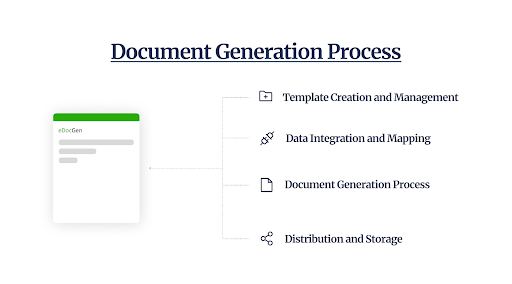
EDocGen document generation process flow

→ See API guide: Document Generation API · Python · C# · PHP

STEP 4

What output formats does EDocGen produce?

Every generation job produces a finished, ready-to-use document in your chosen format:

Format Use Case Variants
PDF Invoices, contracts, reports, compliance documents Fillable (editable) · Flattened (locked) · Print-ready PCL5/PostScript
Word DOCX Letters, proposals, agreements, onboarding packs Standard DOCX · Editable after generation
PowerPoint PPTX Sales decks, board reports, property presentations Single slide · Multi-slide from data arrays
Excel XLSX Financial reports, data exports, bulk statements Single sheet · Multi-sheet · Formulas preserved
EDocGen supported template and output formats: PDF, Word, PowerPoint, Excel

Beyond Basic Mail Merge: What EDocGen Can Do Inside a Template

These capabilities are what separate document generation from a simple find-and-replace. Each is configured directly inside your template — no code required.

Conditional logic in document templates

Conditional Logic (IF-ELSE)

Show or hide entire sections, paragraphs, or table rows based on data values. Build one template that serves multiple scenarios.

How to use IF-ELSE →
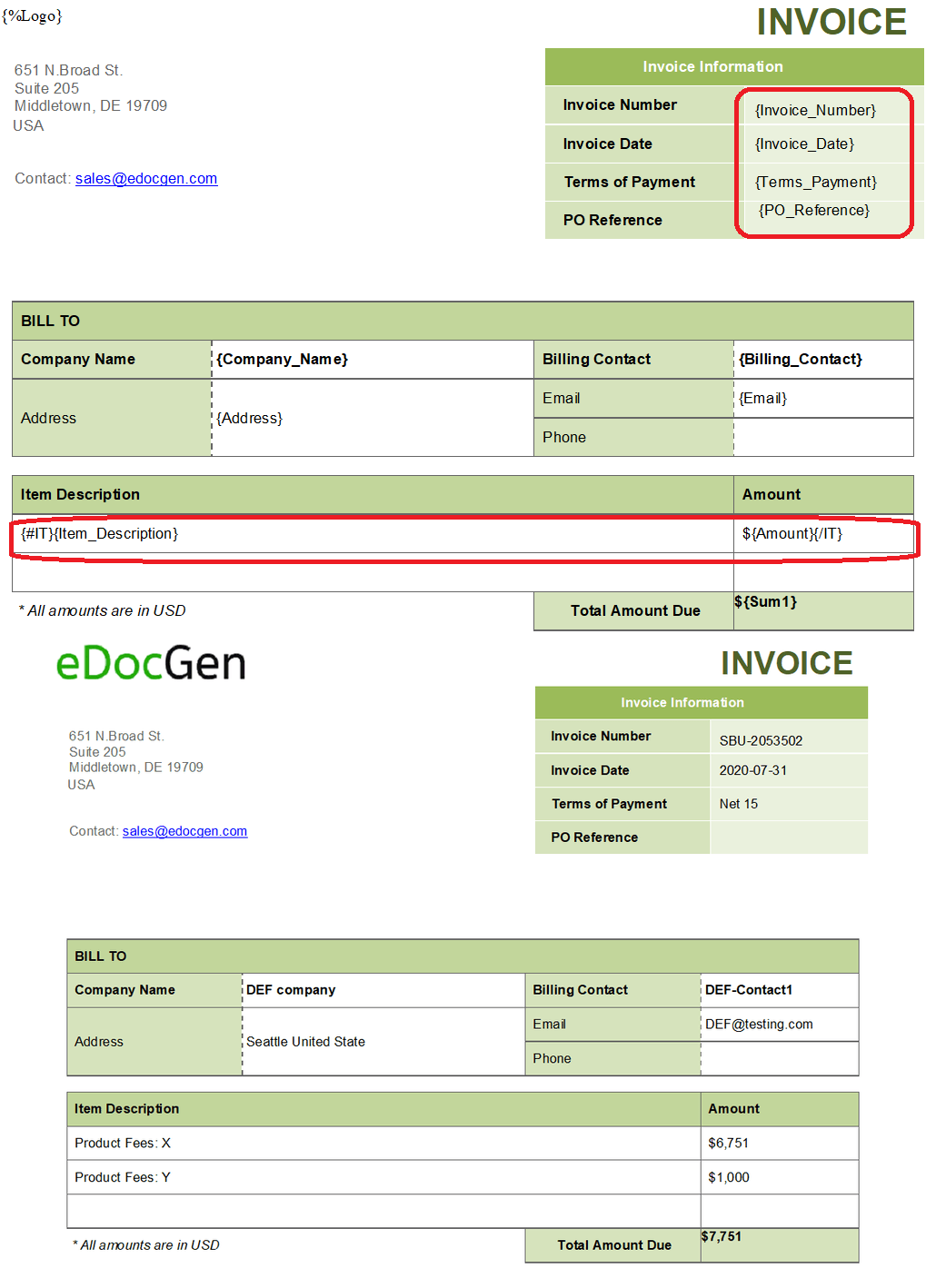
Dynamic loops and repeating table rows

Loops & Repeating Tables

Automatically repeat table rows, list items, or document sections for every record in an array. No fixed row limits.

How to use loops →
Dynamic charts and graphs in Word and PDF

Dynamic Charts & Graphs

Auto-generate bar, pie, line, and area charts from live data. Chart data is passed at generation time — no manual updates needed.

How to add charts →
Dynamic image population in PDF and Word templates

Image Population

Insert logos, photos, or signatures dynamically from a URL, uploaded file, or Base64 string. Every document gets the right image automatically.

How to add images →
Arithmetic calculations inside document templates

Arithmetic Calculations

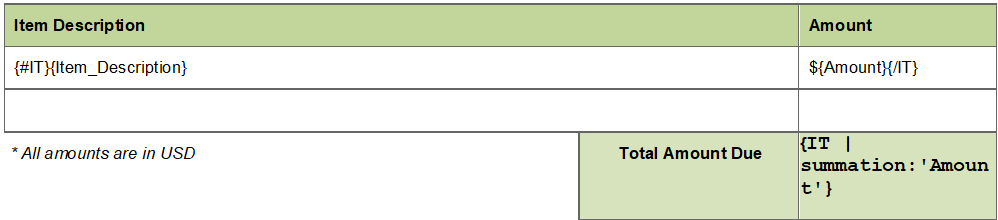
Compute totals, tax, discounts, and averages directly inside the template at generation time. Perfect for invoices and financial statements.

How to add calculations →
░░

QR Codes & Barcodes

Embed dynamically generated QR codes and barcodes into any document. Ideal for tracking numbers, product labels, and invoice validation.

How to add QR codes →
Dynamic content blocks and sub-templates

Content Blocks & Sub-Templates

Conditionally inject entire paragraphs or embedded sub-templates into documents. Build modular, reusable document components.

How to use content blocks →
Multi-lingual document generation

Multi-Lingual Output

Generate the same document in multiple languages from a single template run. Supports Unicode, RTL languages, and locale-specific formatting.

Multi-lingual guide →
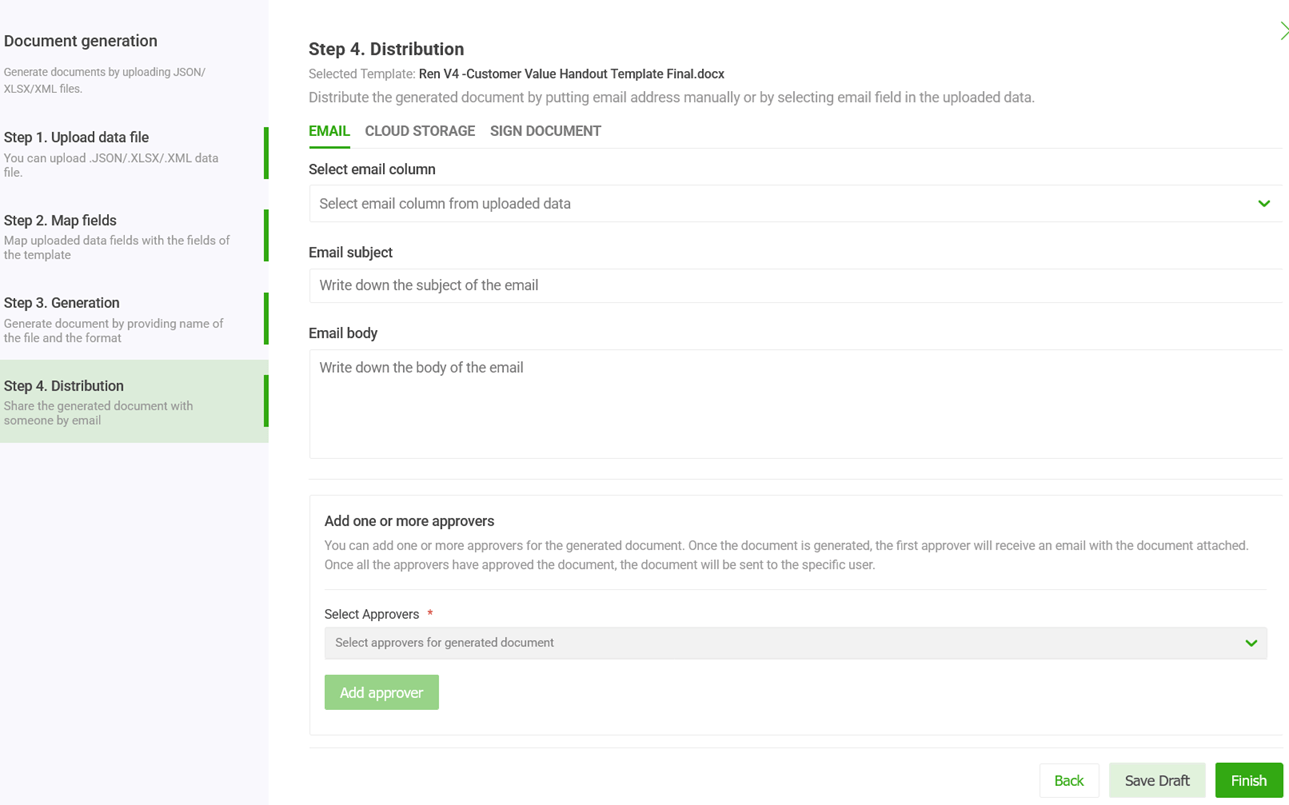
Document distribution via email, eSign and cloud

Automated Distribution

Deliver generated documents via email, eSign provider, or cloud storage in the same job. No manual download and send required.

Distribution options →
Document approval workflow automation

Approval Workflows

Route generated documents through one or more approvers before final delivery. Configure email notifications and approval actions.

Workflow setup →
Auto-generated digital forms from Word and PDF templates

Auto-Generated Web Forms

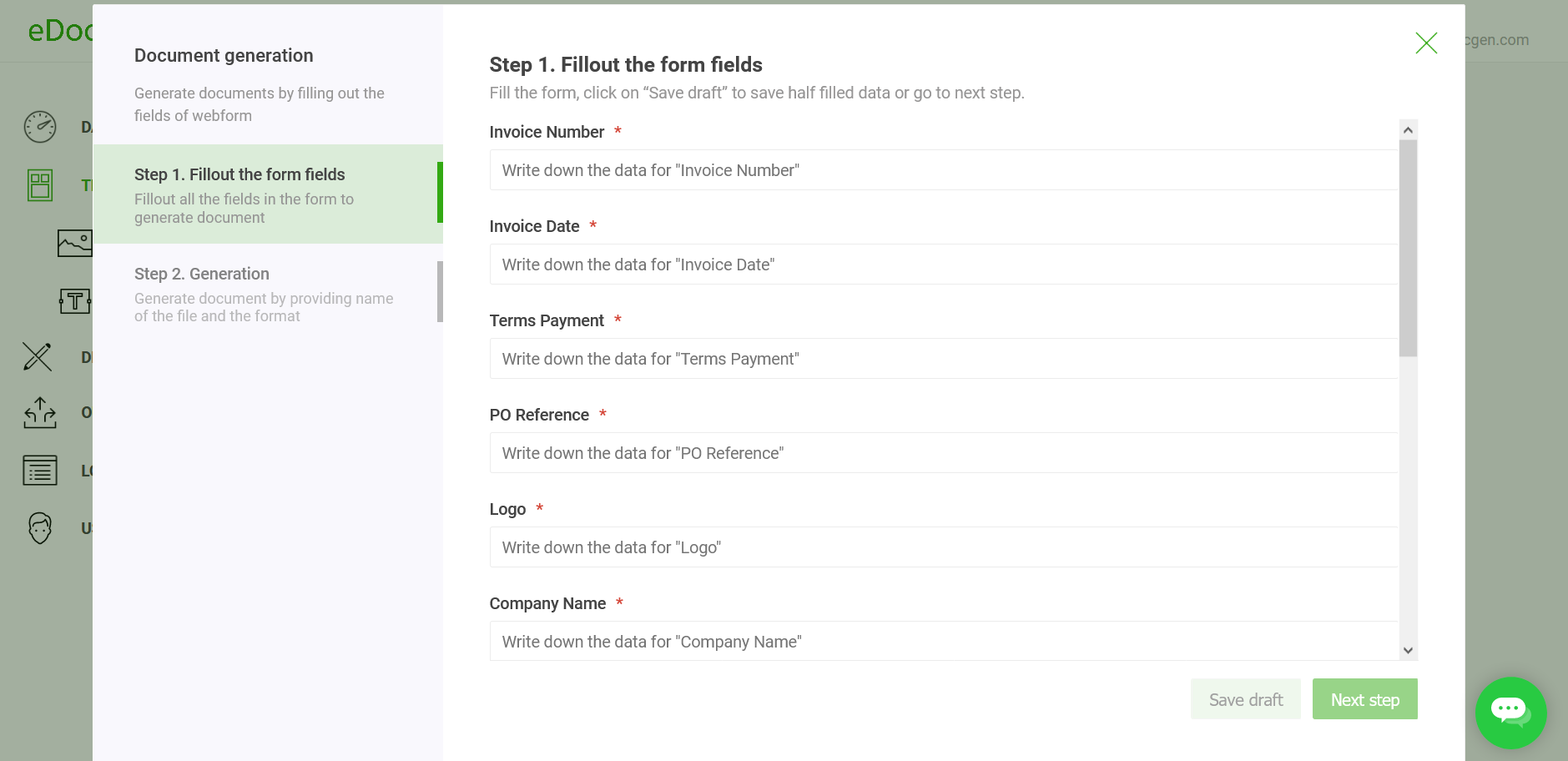
EDocGen converts any template into a fillable web form automatically. Share the URL with customers or staff — submission triggers document generation.

How forms work →

HIPAA and GDPR compliant document generation

Security & Compliance

Hosted on Google Cloud Platform with AES-256 encryption. HIPAA BAA available. All uploaded data files are deleted after generation completes.

View BAA →

Three End-to-End Examples

See exactly how the Template + Data → Document loop plays out for three common enterprise use cases.
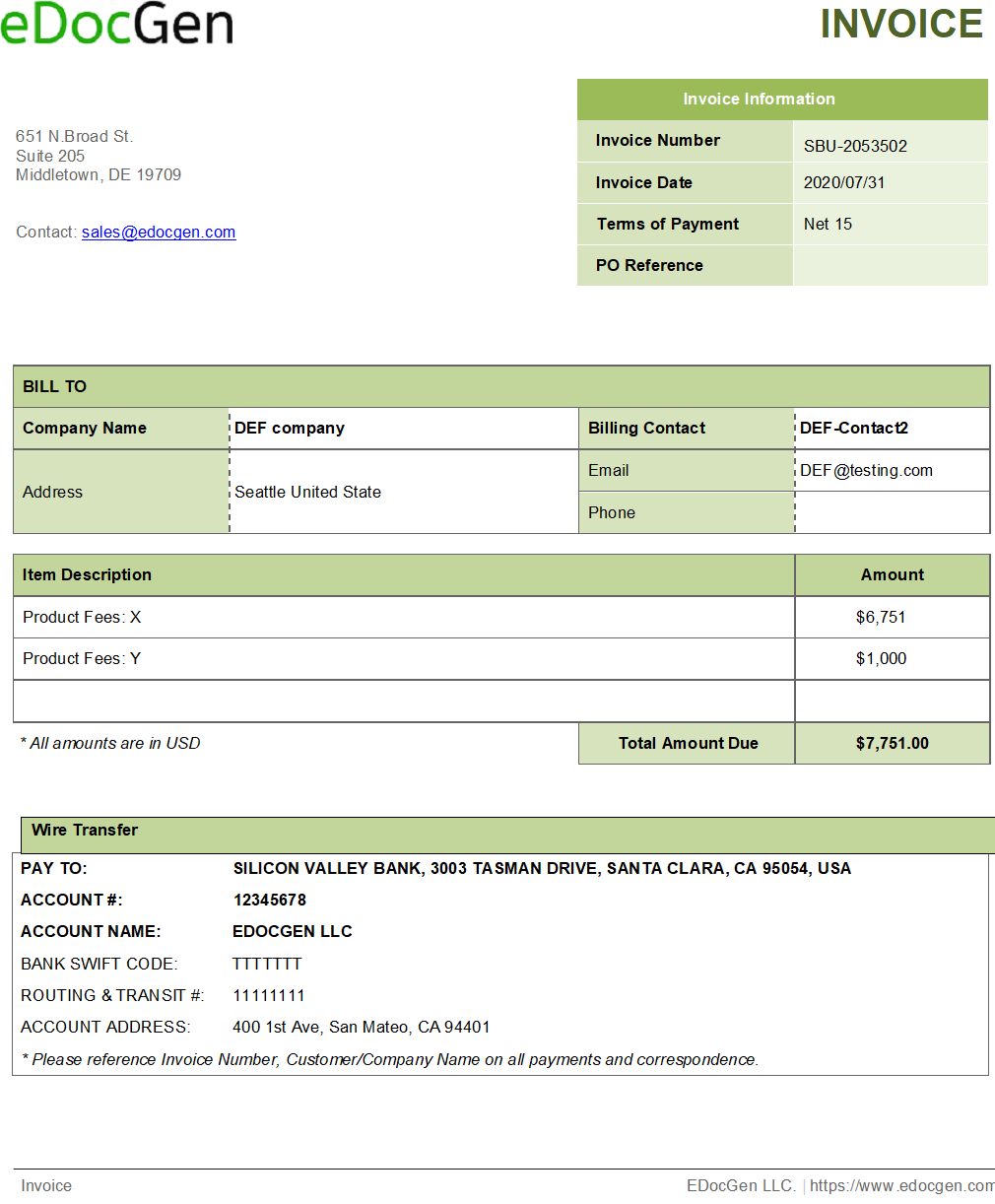
Automated invoice generation from database or Excel
Finance / Billing

Bulk Invoice Generation

Generate thousands of personalised PDF invoices from a single database query or Excel file and auto-send to customer email addresses.

TemplateWord invoice template with line-item loop, total calculation, and company logo
Data SourceSQL Server order database or Excel spreadsheet
OutputBatch PDF invoices emailed via SendGrid
ModeBatch — thousands per run

Bulk Invoice Generator Guide · Invoice Example

Automated sales proposal generation from Salesforce
Sales

Salesforce Proposal Automation

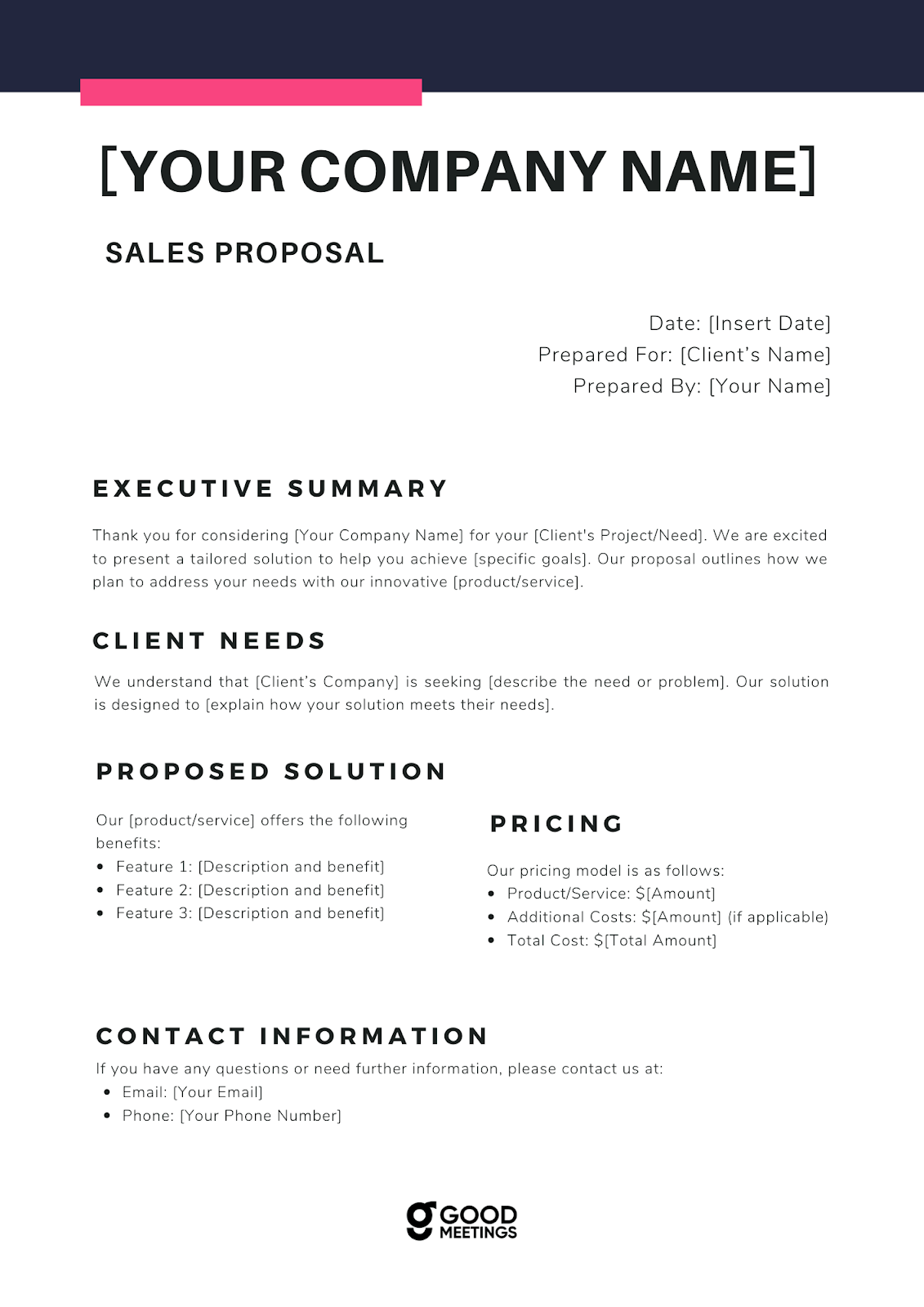
Generate a personalised sales proposal or pitch deck for every Salesforce opportunity with one click — no copy-paste from CRM fields.

TemplatePowerPoint proposal deck with conditional pricing, client logo, and dynamic slides
Data SourceSalesforce opportunity and account objects
OutputPersonalised PPTX or PDF per deal, emailed to the rep
ModeOn-demand — triggered from Salesforce

Salesforce Document Generation · Salesforce PDF Guide

Automated compliance report generation from Oracle database
Finance / Compliance

Regulatory Report Automation

Pull data directly from Oracle or PostgreSQL, populate a Word or PDF report template, and deliver reports to a SharePoint archive — no manual work.

TemplatePDF report template with dynamic tables, charts, and conditional compliance sections
Data SourceOracle or PostgreSQL via connection string + SQL query
OutputBatch PDF reports synced to SharePoint or S3
ModeScheduled batch — runs nightly or weekly

Regulatory Filing Automation · Oracle to PDF Guide

Integration Map: Everything EDocGen Connects With

EDocGen plugs into the systems your teams already use — no new middleware or data pipelines required.
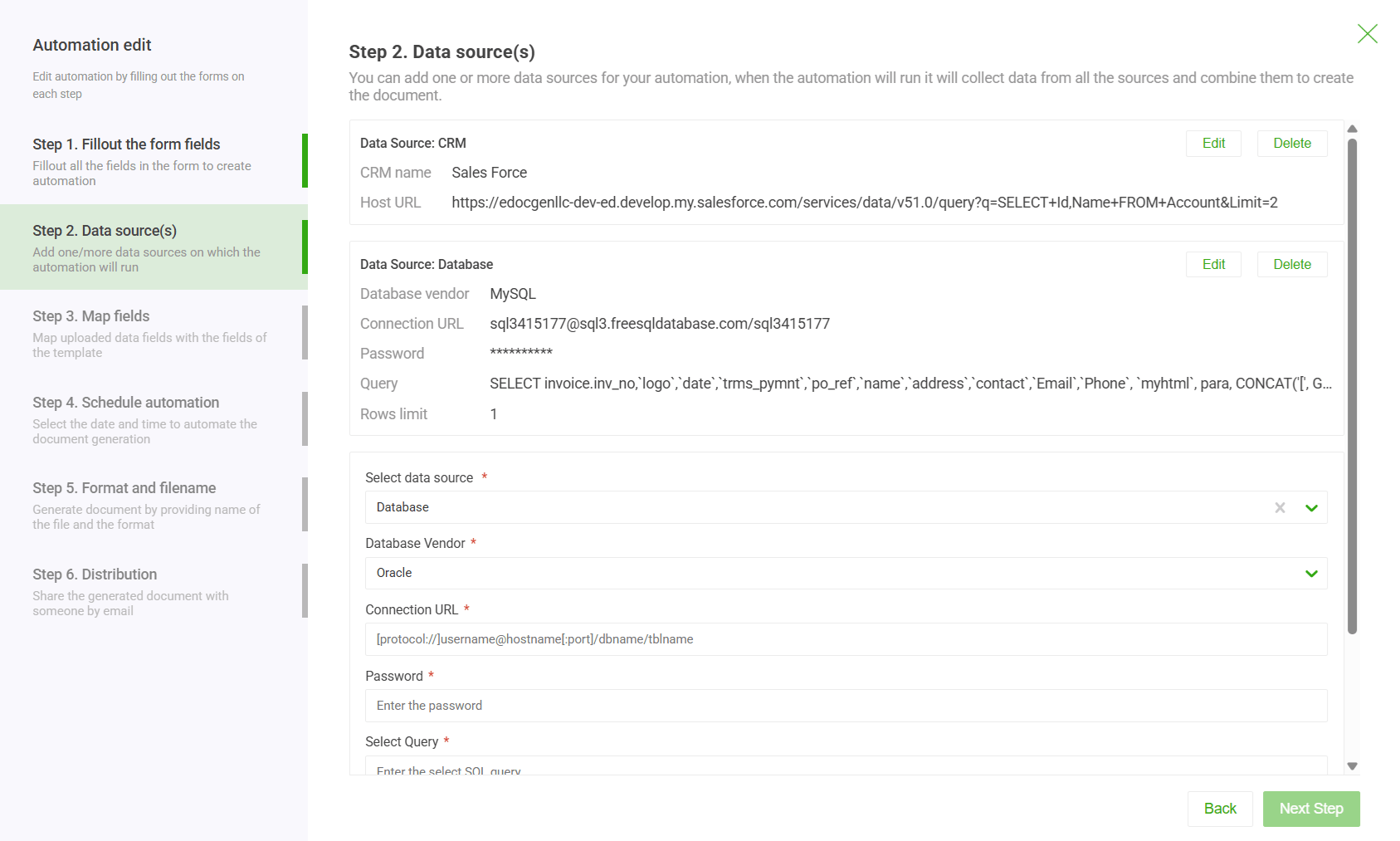
EDocGen integrations with enterprise systems, databases and CRMs

📊 CRM & Business Apps

Salesforce Dynamics 365 HubSpot

🗄️ Databases

SQL Server Oracle MySQL PostgreSQL MongoDB Azure SQL

📁 Data Formats

JSON XML Excel / XLSX CSV

☁️ Cloud Storage & Delivery

SharePoint OneDrive AWS S3 Google Drive Dropbox

✍️ eSign Providers

DocuSign Adobe Sign

📧 Email Delivery

SendGrid Office 365 G Suite AWS SES

💻 Developer SDKs / APIs

REST API Python C# / .NET PHP Java

View all EDocGen integrations

Frequently Asked Questions

Everything buyers, developers, and IT teams ask before getting started.
How does document generation work?
Document generation works by merging live data into a pre-built template to produce a completed document automatically. The three steps are: (1) create a template with dynamic merge field tags, (2) connect a data source such as a database, JSON file, CRM, or web form, and (3) trigger generation to produce the output. EDocGen handles all three steps without requiring any coding from business users.
What is the difference between document generation and mail merge?
Mail merge is a basic one-to-one text substitution inside Microsoft Word, limited to simple field replacement. Document generation supports conditional logic (IF-ELSE), nested loops for repeating data, dynamic charts, image population, calculated fields, multi-format output (PDF, PPTX, Excel), direct database connectivity, API-triggered automation, and omnichannel delivery — all without writing code.
Does EDocGen work without coding?
Yes. Business users can upload existing Word, PDF, PowerPoint, or Excel templates and connect data sources through a point-and-click interface. No programming is required for standard workflows. Developers who want deeper integration can use EDocGen's REST API with Python, C#, PHP, or Java SDKs.
Can EDocGen generate 10,000 documents at once?
Yes. EDocGen is designed for high-volume batch generation and can produce tens of thousands of documents in a single run from a database query or bulk data file. The platform is hosted on Google Cloud Platform and scales automatically to handle enterprise workloads.
Can EDocGen generate documents directly from a database?
Yes. EDocGen connects to SQL Server, Oracle, MySQL, PostgreSQL, and MongoDB. You provide a connection string and SQL query, map the result columns to your template's field tags, and generate documents in bulk. These configurations can be saved for one-click re-generation on a schedule.
Is EDocGen an API or a web application?
Both. EDocGen provides a web application for business users who prefer a no-code interface, and a REST API for developers who need to integrate document generation into their own applications, CRMs, ERPs, or workflow engines. Both modes share the same template library and data connectors.
Does EDocGen support conditional logic in templates?
Yes. EDocGen supports IF-ELSE conditional logic directly in templates. You can show or hide entire paragraphs, sections, table rows, or content blocks based on any data value — without writing any code. Conditions can be nested and combined with AND/OR operators.
How secure is EDocGen?
EDocGen is hosted on Google Cloud Platform with AES-256 encryption at rest and in transit. All uploaded data files are automatically deleted after document generation completes. A HIPAA Business Associate Agreement (BAA) is available for healthcare customers, and a Data Protection Addendum (DPA) is available for GDPR compliance.
EDocGen document generation frequently asked questions
Still have questions?

Book a 20-minute demo and we will walk through your specific use case live.

Book a Free Demo

Ready to Automate Your Document Generation?

Upload your first template and generate your first document in under 10 minutes — no credit card required.

Start Free Trial Book a Demo
Or explore: Getting Started Guide · See All Examples · View Pricing